I have an 11.2-meter, 9.5-metric-ton Super Lauwersmeer 1120 boat. It is equipped with a three-bladed propeller 35 cm in diameter and an 80-chevaux Fiat Iveco 804am diesel engine.
The plan is to install an electric motor in my boat, but to keep the diesel engine as is, by removing the flexible coupling.
The final solution work well !
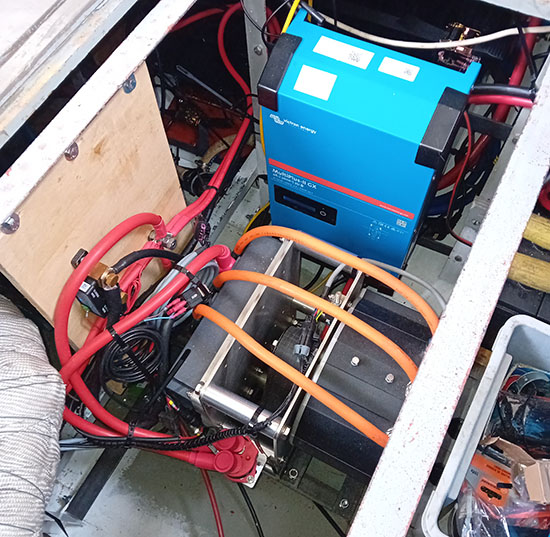
But let's back up a bit...
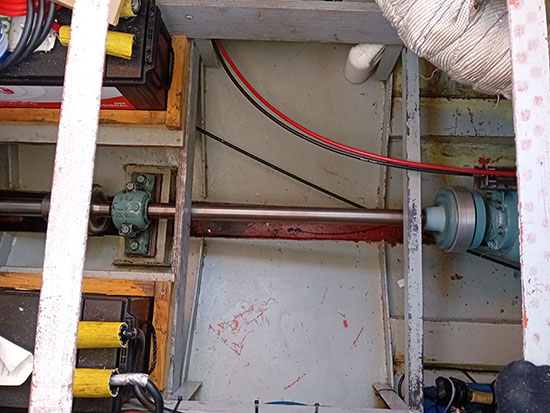
The boat has a large space between the diesel engine and the bearing that supports the propeller shaft: this is the ideal setup for adding an electric motor here!
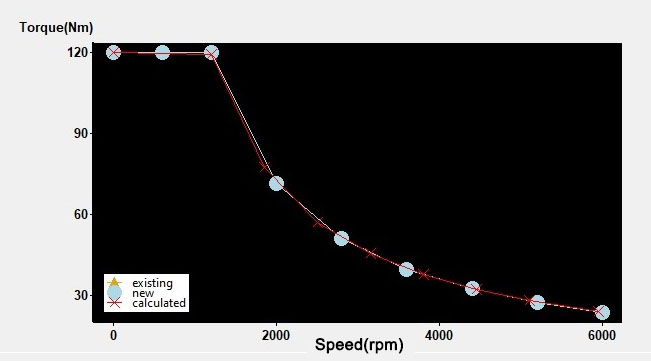
With a 48 VDC lithium battery, the ME1616 boat motor kit delivers 15 kW of peak power at an engine speed of approximately 2,300–2,500 rpm (3,000 rpm max). The max power at max torque of 120 Nm is reach at 1200 rpm :
For my 40mm drive shaft, I opted for a drive shaft bracket with a center-to-center distance of 222mm:
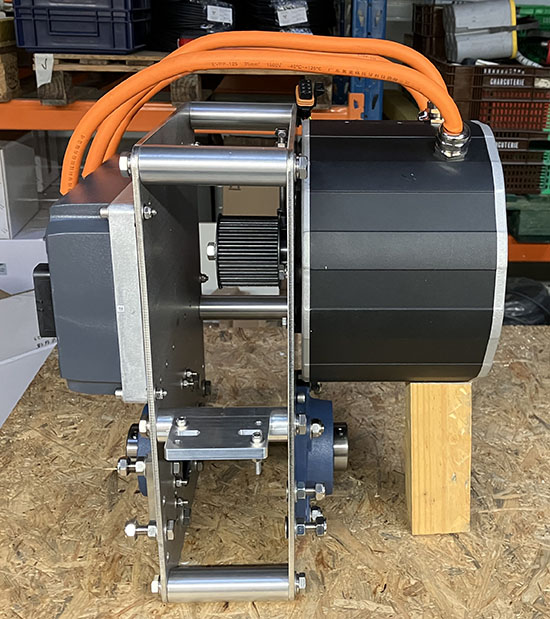
At this power level, the width of the HTD belt in the transmission is 50 mm.
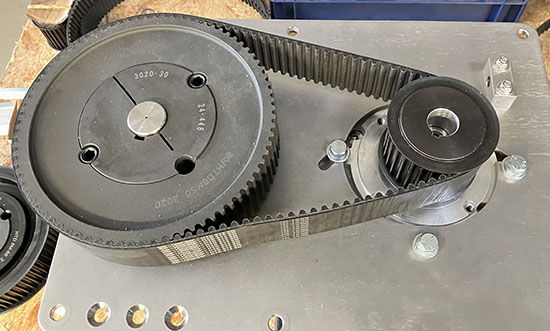
To achieve approximately 390 rpm at the propeller shaft, the reduction ratio must be approximately 1200 / 390 = 3.07. The selected transmission kit is the 28-90 for 50mm belt, with a ration of 3.21:
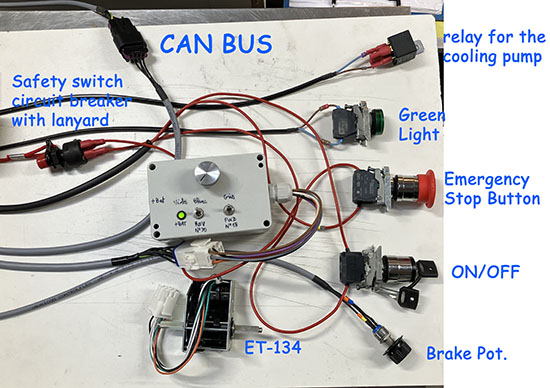
A 3-meter control cable between the drive and the control station is just right for me:
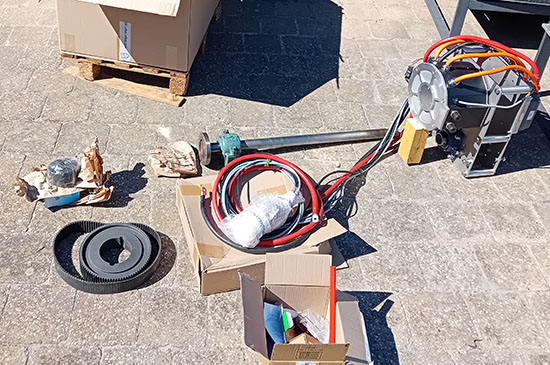
After a few weeks of manufacturing and shipping, the kit arrived at my house safely. Now all that's left is to install it on the boat!
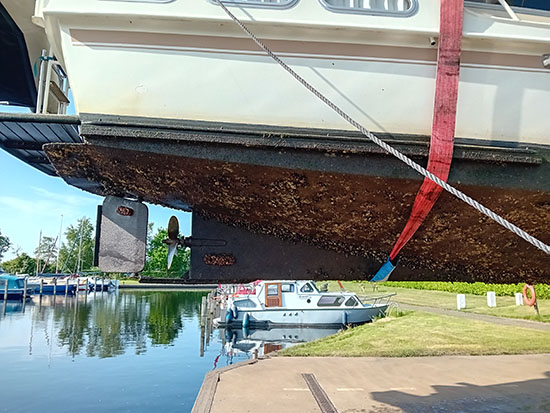
Initially, the power consumption was somewhat disappointing. However, after the boat's hull was pressure-washed, performance improved significantly; in fact, we removed a full wheelbarrow's worth of barnacles and shells from the hull during the process!
The high-pitched whine of the drive belt was also a bit annoying. I bought a 7-kg weighted blanket at a secondhand store for just €4.50. I folded it in four and draped it over the motor frame, tucking it under the cables so that the top and sides of the frame were completely covered. It fits perfectly. The noise has been significantly reduced and is no longer bothersome.
Before cleaning the hull, the power required to reach a speed of 7 km/h was 7.5 kW. After cleaning, it decreased by 1.5 kW. With the diesel engine, I consume 2.5 liters of fuel per hour at a speed of 8 km/h.
I started with the following test: running the diesel engine at full throttle, then suddenly dropping to idle and shifting the gearbox into neutral. The deceleration was recorded every second using an Arduino sketch. Applying the simple formula F=m·a, I ultimately concluded that a power output of 3.5 kW was required for a cruising speed of 8 km/h.
In practice, however, it turns out to be double that amount. I don't know why—perhaps due to friction and propeller losses?
Even so, my wife and I are happy with the experiment. No vibrations, hardly any noise, and no foul-smelling crankcase fumes or exhaust gases. We can simply talk while underway without raising our voices, we can put on the radio playing some music. It’s wonderful. We can travel a few days a few hours and then charge the battery while staying overnight in a marina. My Victron Multiplus 2 3000VA charges the battery with 30Amps. Enough during a 20 hours visit in a marina.
In the near future diesel engines will be more and more banned due to the environment. At some places in the Netherlands this has already begun.